Fly Planes - Airport Tycoon
- 3.4
- Rating
- 500.00K
- Installs
- Free
- Price

 Analysis by App-foxy
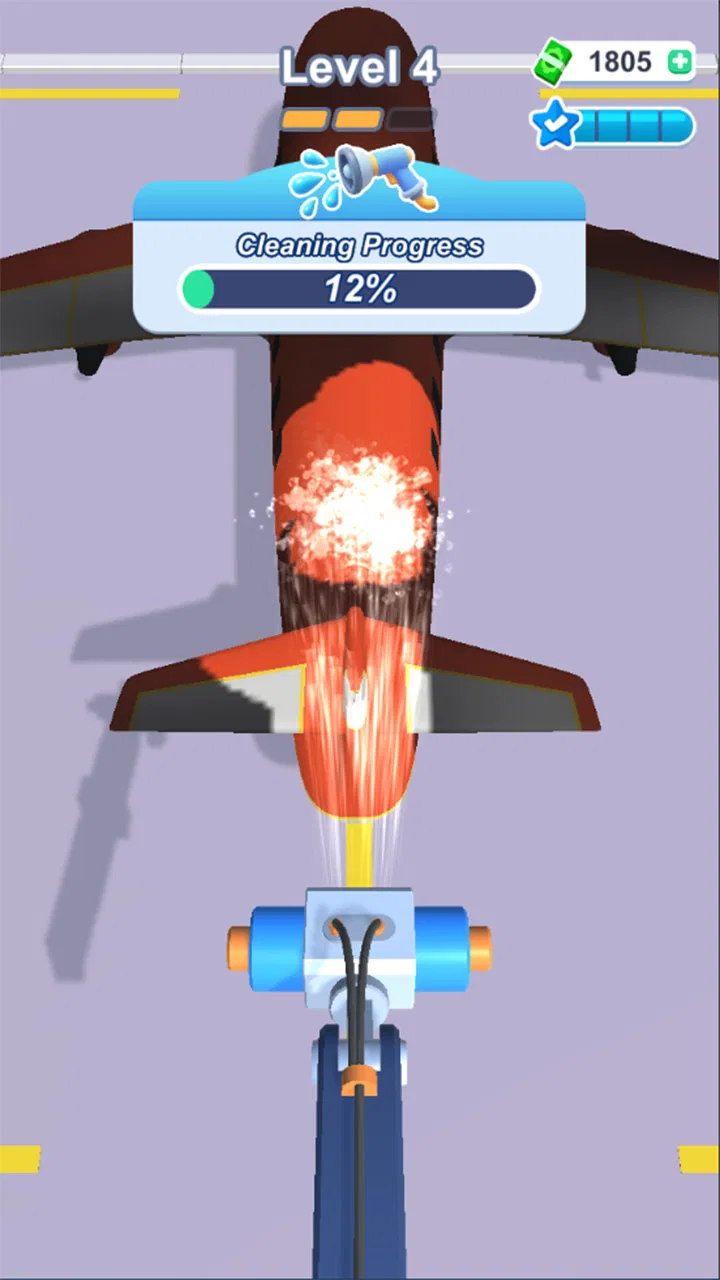
Fly Planes - Airport Tycoon is the kind of simulation I can imagine opening for a few minutes while waiting for dinner, then returning to later when I want a more relaxed airport-themed distraction. It combines airport management with airplane driving, so it is not simply a menu-based tycoon game and not purely a flying game either. That mixed identity is its main appeal: I get the satisfaction of arranging an airport operation while also having a more direct role in the aircraft side of the experience.
After spending time with it, my impression is positive but measured. The game is easy to understand, free to try, and suitable for a broad audience. At the same time, its modest average rating of 3.4 from roughly 315 ratings suggests that it will not satisfy everyone equally. I would recommend it most to players who like light airport management games and want something more accessible than a detailed aviation simulator. I would not choose it for realistic flight procedures, deep economic planning, or a highly competitive long-term strategy experience.
How it fits into a shared household
On a shared phone or tablet, I’d treat this as a casual activity people can take turns enjoying, rather than a game that needs everyone playing at once. Its airport theme gives the group an easy starting point for conversation, while the mix of management and aircraft handling lets different players find their own way in. The next question is how to keep those turns comfortable and fair.
You May Also Like

 AccuWeather: Weather Radar
AccuWeather Review: A Quick, Clear Forecast for Everyday Decisions
For everyday plans, the best forecast is the one you can understand quickly. AccuWeather makes rain timing, radar, and local conditions easy to act on, with a few trade-offs.

 Hill Climb Racing
Why Hill Climb Racing Still Turns Crashes Into One More Run
A tiny car, a bumpy hill and one more upgrade: Hill Climb Racing keeps resurfacing because its simple chaos makes every near-miss feel personal.

 AliExpress - Shopping App
AliExpress Makes Global Shopping Feel Personal, but Shoppers Bear the Risk
AliExpress turns a global marketplace into a pocket-sized discovery engine. Its reach is useful, its shopping loop compelling, and its trade-offs easy to miss.

 Lords Mobile: Kingdom Wars
Lords Mobile Is a Kingdom-Building Routine, Not a Quick Match
A case-by-case verdict on the building, battles, device demands, and social commitments that make Lords Mobile rewarding for some players and exhausting for others.

 PDF Scanner app - TapScanner
TapScanner Makes Paperwork Easier to Capture, Check, and Share
TapScanner makes scanning with a phone feel less like a rescue operation and more like a dependable step in getting work done. Its capture tools are useful, though not flawless.

 Block Blast!
 Shows How Much a Puzzle Game Can Leave Out
A quiet grid game shows why puzzle players increasingly value instant clarity, repeatable skill and low-pressure play—and where the genre still needs to catch up.
More From Our News Desk
View All News


A simple game for passing the device around
One of the most practical ways to use this game is on a shared phone or tablet. Someone can take a short turn managing the airport or flying a plane, hand the device to another person, and let the next player continue. That works particularly well when the household wants a casual activity without setting up a multiplayer session or creating separate accounts.
I found that the game’s theme makes it easy to explain to a new player. You do not need to understand aviation terminology before starting. The basic idea is immediately recognizable: airports need to function, planes need to be handled, and progress comes from keeping the operation moving. That makes it more approachable than simulation titles that begin with long tutorials, technical dashboards, or complicated control layouts.
For a parent and child using the same device, I would treat it as a turn-based shared activity rather than assuming the game provides a family mode. The useful household routine is to agree on who is playing, avoid interrupting an active action, and let each person make decisions during their own session. That small boundary matters because management progress can be affected by another person changing the current situation without explaining what happened.
The game also suits a quiet evening when one person wants to play while others are nearby. Its airport setting gives people something to comment on, and the driving element can make the experience more engaging than watching somebody tap through ordinary menus. Still, I would keep expectations realistic: this is a casual game for shared entertainment, not a replacement for a dedicated local multiplayer title.
Why the mixed format helps short sessions
Airport tycoon games can sometimes feel like spreadsheets, while airplane games can become repetitive if the only activity is steering. This title benefits from putting those two ideas together. When I want a more active moment, the airplane-driving side gives me something direct to do. When I prefer a slower pace, the management theme gives the session a planning angle.
That balance is especially useful on a shared device because different players can enjoy different parts. One person may care about the airport’s overall operation, while another may be more interested in controlling the aircraft. The game therefore has a natural conversation point: instead of arguing over a single correct way to play, household members can compare which part they find more satisfying.
There is a trade-off, though. A hybrid game may feel less focused than a specialist alternative. Players looking for a serious tycoon experience could find the airport management too light, while dedicated flight fans may find the aircraft handling less detailed than a proper flight simulator. I see the combination as a strength for casual use, but also as the reason experts in either field may eventually want something more specialized.
Setting up sensible boundaries on a shared device
Before passing the device along, I’d agree on a simple routine: finish the current action, explain what you were trying to do, then let the next person decide what comes next. That keeps experimentation from being mistaken for a mistake and avoids turning someone else’s plan into a surprise. It also makes it easier to include players who are still learning the controls.
Keep progress and decisions easy to track
Because this is a game that mixes ongoing management with direct play, I recommend agreeing on a simple handover routine. Before passing the device, the current player should finish the immediate action, explain what they were trying to do, and mention any decision that still needs attention. That prevents the next person from mistaking an unfinished task for a problem or undoing a plan they did not know about.
This is more important in a management game than in a quick arcade title. A short interruption can change the whole context of the next turn. If one household member is experimenting with the airport while another is trying to build a careful routine, the shared experience can become frustrating unless everyone accepts that the game is being played cooperatively rather than competitively.
I would also suggest separating “learning turns” from “serious turns.” A younger player or first-time user should be allowed to explore the controls without pressure. Once everyone understands the basic rhythm, the household can decide whether to preserve a particular approach or simply treat every session as experimentation. This keeps the game friendly and avoids making a free casual title feel like a chore.
What to expect from the free model
The game is free, which lowers the barrier to trying it on a household device. I could install it as an experiment without asking the family to commit money first. That makes it a reasonable choice for people who are unsure whether the airport theme will hold their attention.
Free games still deserve practical boundaries. I would make sure younger players know that “free” does not automatically mean every part of the device experience should be explored without permission. Since the game is being used by several people, the adult responsible for the device should handle any store prompts or account-related decisions rather than leaving that responsibility to a child.
I am deliberately careful here because the game should be judged by what it offers as a game, not by assumptions about household controls. I would not install it expecting special child profiles, shared save management, or a built-in family dashboard. Instead, I would use the normal device routine: one agreed player at a time, adult oversight for account actions, and a clear understanding that progress belongs to the current device environment.
Device compatibility and the first check
The game requires Android 8.0 or later, so checking the device version is the first sensible step before planning a shared installation. That requirement is not especially demanding for many current phones and tablets, but an older spare device may still fall outside it. A quick compatibility check prevents an unnecessary setup discussion around hardware that cannot run the game.
The current version is 2.1.5, and the game was released on March 31, 2023. Those details help place it in context: this is an established mobile release rather than a brand-new experiment. I would still approach it as a lightweight title and avoid assuming that a version number alone guarantees the depth or polish of a major console simulation.
Coordinating play between different kinds of players
Players may enjoy different parts of the airport experience, so I’d invite each person to try both the planning side and the hands-on aircraft side before settling into informal roles. Someone who prefers observing can still suggest ideas without having to take over the device. That kind of flexible turn-taking works best when the group is clear about who is playing and what they hope to do on their turn.
Give each player a clear role
A useful household approach is to let players choose how they want to contribute. One person can focus on the airport-management decisions, another can take responsibility for the airplane-driving moments, and a third can simply observe and suggest ideas. This informal division gives the game structure without pretending that it has a formal cooperative system.
The advantage is that each person can engage at a comfortable level. A newcomer does not have to master every part immediately, while an experienced player can explain the consequences of an action instead of taking over the entire session. I prefer this method because it turns the game into a conversation about choices rather than a test of who can react fastest.
There is also a useful learning benefit. The player interested in flying can see how their actions relate to the broader airport situation, while the person making management choices can better appreciate the practical side of handling aircraft. Even if the game keeps its systems simple, this connection makes the theme feel more coherent than playing two unrelated mini-games.
Use short handovers instead of long arguments
When several people share one save or one device, disagreements often come from different expectations. One player may want to progress quickly, another may want to explore, and another may simply enjoy the visual activity of driving planes. I found that a short explanation before each turn solves much of this: state the goal, take the turn, and report what changed.
This approach is particularly helpful for children who may not yet understand why a seemingly harmless action can disrupt a longer plan. Rather than treating mistakes as failures, I would use them as a way to explain cause and effect. The airport theme naturally supports that conversation because operations depend on order and attention, even when the game presents those ideas in a simplified form.
For adults sharing a device, the same principle avoids unnecessary tension. If the game is being used as a relaxed break, there is little value in turning every decision into a debate. Agreeing that each player gets room to experiment makes the experience more enjoyable and reflects the game’s casual nature.
Where a different game may coordinate better
If the main goal is genuine cooperation, a title designed around simultaneous multiplayer or explicit shared objectives would probably be a better choice. This game works for passing a device around, discussing decisions, and taking informal turns, but I would not present it as a guaranteed substitute for a multiplayer airport game.
Likewise, a household that wants a detailed aviation lesson may prefer a specialist simulator. Those games usually offer more technical depth, but they can be intimidating for younger users and less suitable for a five-minute shared session. Fly Planes occupies the middle ground: more interactive than a purely passive management game, but easier to approach than a serious flight simulation.
Age, trust, and choosing the right player
The Everyone content rating makes this a plausible choice for a family device, but I’d still introduce it alongside a child rather than assume the rating means every player will understand or enjoy it immediately. I’d also keep installation and any store-related choices with the adult responsible for the device. With those expectations in place, it becomes easier to judge whether the game suits the household’s ages and habits.
Everyone-rated does not mean every child will enjoy it
The content rating is Everyone, which makes the game broadly suitable from an age-content perspective. That is reassuring for a shared family device, especially when the household wants to avoid mature themes. However, an age rating describes suitability, not guaranteed enjoyment or reading ability. A younger child may still need help understanding objectives, controls, or why a management decision matters.
I would introduce it to a child by playing together first. That gives the adult a chance to see whether the controls feel comfortable and whether the child prefers the airplane-driving side or the airport-planning side. It also avoids assuming that a game with an accessible theme will automatically be self-explanatory.
The game’s broad rating is one reason I can recommend it as a casual household option, but I would not use the rating as a reason to remove all supervision. Shared-device habits still matter. Children should know which actions are part of the game and which actions belong to the surrounding device or app store environment.
Trust is mostly about the device routine
For me, the trust question is less about the airport theme and more about how the game fits into the household’s existing habits. If several people use the same phone, everyone should know whether they are allowed to install games, change settings, or make decisions affecting stored progress. Those boundaries should be agreed outside the game rather than discovered through an argument during play.
I would also avoid promising a child that their progress is permanently protected unless the household has a clear backup and account routine. The safest expectation is that shared-device progress should be treated as shared progress. That mindset reduces disappointment if another player experiments or if the device later changes hands.
This is not a criticism unique to the game; it is simply especially relevant to a management title. The more a player invests in building a routine, the more frustrating an unexpected change can feel. A little communication before and after play makes the experience much smoother.
Who should skip it
I would skip this game if my priority were realistic aircraft physics, detailed airport logistics, or a deep financial simulation. The store summary presents an airport-management and airplane-driving experience, and that is the right way to approach it. It should not be mistaken for professional training software or a highly technical simulator.
I would also look elsewhere if I wanted a game built around competitive online play, formal family accounts, or clearly separated profiles. Nothing about the basic concept makes it the obvious choice for those needs. A focused multiplayer title or a more advanced simulation would be a better fit depending on the household’s goal.
On the other hand, I would keep it in mind for someone who enjoys aviation themes but finds specialist simulators too demanding. It is also a good candidate for a person who likes switching between active controls and lighter management decisions instead of committing to only one style.
My household verdict after using it
After trying it as a shared-device option, I’d recommend it to households looking for a relaxed aviation-themed game that can prompt conversation without requiring formal multiplayer. I’d choose something else if the priority is detailed flight realism or structured cooperative play. The best fit is a group happy to take turns, explore at its own pace, and treat the airport’s management and flying elements as complementary ways to play.
A useful middle ground, with clear limits
RevolutionGames Studio has made a game that is easy to place in the casual simulation space. Its strongest quality is the combination of airport oversight and airplane driving. That gives the experience enough variety for short sessions and makes it more suitable for shared use than a management game that consists entirely of menus.
The audience is also broad. It is free, rated Everyone, and has passed half a million installs, so it is clearly accessible to a large mobile audience. I would not treat popularity as proof that it will suit every player, but it does make the game feel like a reasonable first experiment for anyone curious about airport-themed simulation.
My main reservation is depth. Players who enjoy optimizing complex systems may quickly notice that a casual mobile format cannot offer the same detail as a dedicated management simulator. The same applies to flight enthusiasts who want precise control and realistic procedures. The game’s value comes from being approachable and varied, not from reproducing the full complexity of aviation.
How I would recommend using it
For a household, I would install it on a compatible shared device, play the first session with the intended users, and establish a simple turn-taking rule. I would let each person try both sides of the experience before deciding whether one player prefers management and another prefers flying. That small test reveals quickly whether the hybrid design works for the group.
I would keep sessions informal and avoid making the game responsible for teaching cooperation by itself. The best results come when the household supplies the coordination: explain the current plan, give the next player room to act, and accept that experimentation is part of the fun. Used that way, the game can become a pleasant shared distraction rather than a source of arguments over progress.
For an individual player, I recommend it when the goal is a free, approachable airport simulation with some direct airplane interaction. I would choose a different option for technical realism, serious strategy, or structured multiplayer. My final view is that Fly Planes - Airport Tycoon is worth trying because its two-part design gives casual players more to do than a basic tycoon game, while its limitations are easy to understand if you approach it as a light mobile simulation rather than a full aviation simulator.
FAQs for Fly Planes - Airport Tycoon
01What is Fly Planes - Airport Tycoon all about?
Fly Planes - Airport Tycoon is a simulation game where players manage an airport, overseeing everything from flight schedules to airport upgrades. The objective is to efficiently handle operations, grow your airport, and manage resources to create a thriving aviation hub. The game combines strategic planning with fun, engaging gameplay.
02Is Fly Planes - Airport Tycoon free to play?
Yes, the game is free to download and play on both Android and iOS platforms. However, it offers in-app purchases that can enhance the gameplay experience, such as premium currency, special upgrades, or exclusive items. Players can enjoy the core game without spending money, but some features may be locked behind paywalls.
03What are the main features of the game?
Fly Planes - Airport Tycoon offers a variety of features including airport management, plane customization, and flight scheduling. Players can expand their airport, unlock new aircraft, and compete with others globally. The game also includes challenges and events that keep the gameplay fresh and engaging, with regular updates adding new content.
04Are there any age restrictions for playing the game?
Fly Planes - Airport Tycoon is generally suitable for players aged 4 and above, according to the app store ratings. The game contains mild cartoon violence and simplistic management tasks, making it appropriate for younger audiences. However, parental guidance is advised due to the presence of in-app purchases.
05Does the game require an internet connection?
Fly Planes - Airport Tycoon requires an internet connection for certain features, such as global leaderboards, events, and social interactions. Offline play is possible, but players will miss out on some interactive elements and updates. For the best experience, a stable internet connection is recommended.
Pros
- Engaging gameplay with realistic airport management.
- Variety of planes and upgrades to explore.
- Smooth graphics enhance the overall experience.
- User-friendly interface for easy navigation.
- Frequent updates with new features and events.
Cons
- Requires constant internet connection to play.
- In-app purchases can be quite expensive.
- Occasional bugs may disrupt gameplay.
- Long wait times for certain upgrades.
- Limited offline play options available.

Fly Planes - Airport Tycoon
Gallery